Blog
Hair Loss in Women: Why Hair Thins, What to Get Checked, and Your Options
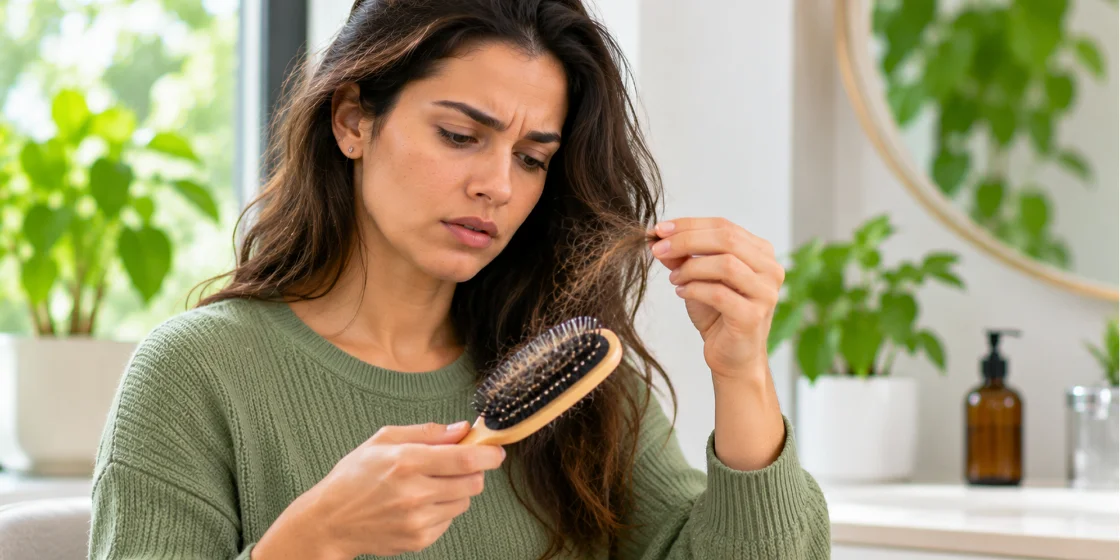
Hair loss in women is more common than most people think. It can be stressful too. You see more hair in the shower, on your pillow, or in your brush, and you start to worry.
Some shedding is normal. The American Academy of Dermatology (AAD) says, "It's normal to shed between 50 and 100 hairs a day."
When you lose more than that, or your hair starts to look thinner, there's usually a reason. Finding that reason comes first. It helps you pick the right treatment for hair loss in women.
This blog covers what hair loss in women looks like, the common causes, what a doctor may check, and the options that have been studied.
So, let us now look into "Hair Loss in Women: Why Hair Thins, What to Get Checked, and Your Options"!
What Does Hair Loss in Women Look Like?
Hair loss in women often looks different than it does in men. Most women don't go bald in spots.
The AAD says the first sign in women is "usually overall thinning or a widening part."
Here's what women often notice:
- A wider part
- More scalp showing on top
- A thinner ponytail
- Short, fine hairs around the hairline
- More hair in the drain or brush
One woman in her early 40s shared her experience on a parenting forum. Her long hair had started thinning at the ends. She also noticed short, fine hairs at her hairline. She had low iron in the past.
Hair thinning in women can happen slowly over years. Severe hair loss in women can also come on suddenly, often a few months after a stressful event.
What Causes Hair Loss in Women?
There isn't just one reason for hair loss in women. Often, more than one thing is going on. Here are the most common causes of female hair loss.
Female Pattern Hair Loss
This is the most common type. It's called female pattern hair loss, and it usually shows up as thinning on top of the head.
The AAD says, "It's hereditary. You inherit the genes from your mother, father, or both."
It's different from balding in men. Balding hair in women usually means the hair gets thinner and finer, not that it's all gone.
Hormone Changes, Including Menopause and PCOS
Hormones play a big role in hair.
Hair loss after menopause is common. The AAD says female pattern hair loss is more common after menopause, so "hormones may also play a role." If you've noticed other signs of low estrogen, you can read our blog on symptoms of low estrogen in women.
PCOS can also cause hair loss. The AAD lists it as a common cause of the hormone imbalance linked to thinning hair. You can learn more about PCOS here.
Thyroid Problems
The AAD says, "If you have a problem with your thyroid, you may see thinning hair."
Both an underactive and an overactive thyroid can affect hair. If you have other symptoms too, like tiredness or weight changes, read our blog on signs of thyroid problems in females.
Low Iron, Protein or Zinc
Your hair needs nutrients to grow. The AAD says if you're not getting enough iron, protein, or zinc, "you can have noticeable hair loss."
Low iron comes up a lot on hair loss forums. One woman said her hair falls out in handfuls whenever her iron drops to the "borderline" range.
Shedding After Stress, Illness or Childbirth
A big stress on the body can cause a lot of hair to shed at once. This can happen after an illness, surgery, or a very stressful time.
It's also common after having a baby. The AAD says that after childbirth, "you may notice a lot more hairs in your brush or on your pillow."
Tight Hairstyles and Some Medicines
Pulling your hair back tightly, day after day, can damage it. The AAD warns that "the continual pulling can lead to permanent hair loss."
Some medicines can also cause hair loss as a side effect. If you think a medicine is the cause, talk to your doctor before you stop taking it.
What Are the Different Types of Hair Loss in Women?
Doctors group hair loss into a few main types:
- Female pattern hair loss, which causes slow thinning on top
- Telogen effluvium, which is sudden shedding after stress, illness, or childbirth
- Traction alopecia, from tight hairstyles
- Alopecia areata, where the immune system causes round bald patches
- Scarring alopecia, where inflammation damages the hair follicles
Some women have more than one type at the same time.
How Do Doctors Find the Cause of Hair Loss?
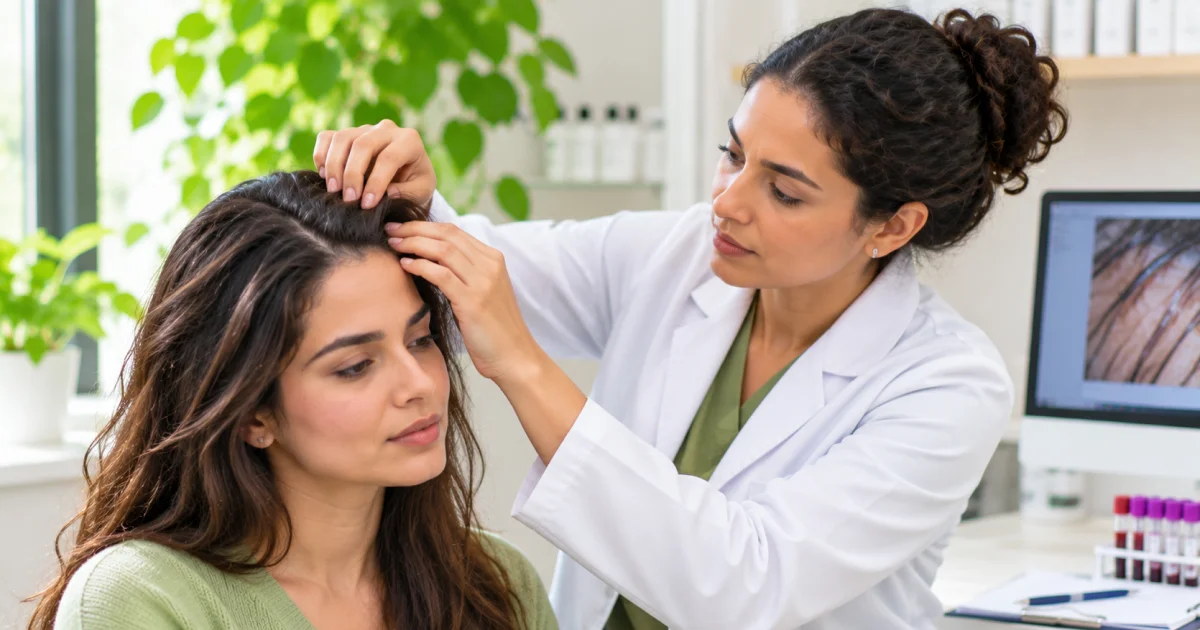
A doctor will usually start by asking questions and looking at your scalp. They'll want to know when the hair loss started, how fast it's happening, and what else is going on in your life.
The AAD says, "You may need a blood test or scalp biopsy."
Things your doctor may check:
- Thyroid levels
- Iron and ferritin (stored iron)
- Hormone levels
- A small scalp sample, if the cause isn't clear
Testing can change what you thought was happening. One woman on a female hair loss forum had been told she had pattern hair loss. She pushed for full blood work and a biopsy. Her ferritin was in the normal lab range, but her new doctor said it was low for hair growth. The biopsy didn't show pattern hair loss. It showed mild inflammation from heat styling.
Her advice to others was simple: get your tests done.
How to Treat Hair Loss in Women?
The right treatment depends on the cause. A treatment for pattern hair loss won't help much if the real problem is low iron or a thyroid issue.
That's why the first step is always finding out why your hair is thinning.
What Are the Treatment Options for Hair Loss in Women?
Here are the hair loss in women treatment options doctors may talk about with you.
Minoxidil
Minoxidil is applied to the scalp. The AAD says it's the most recommended treatment for female pattern hair loss.
It's important to set the right expectations, though. The AAD says it "can help early hair loss; it cannot regrow an entire head of hair."
The AAD also says women who are pregnant, planning to get pregnant, or breastfeeding should avoid it.
Prescription Medicines
Some prescription pills may help with certain types of hair loss. Spironolactone is one of them. The AAD says it "may be an option" for some women.
These medicines aren't for everyone. The AAD warns that prescription hair loss pills may cause congenital disabilities. So they're not an option if you're pregnant or planning to be.
Treating the Underlying Cause
Sometimes the best treatment for hair loss in women is treating what's behind it. That could mean:
- Correcting low iron
- Treating a thyroid problem
- Managing PCOS
- Changing a medicine, with your doctor's help
- Wearing looser hairstyles
Light Therapy and Microneedling
Light therapy uses low-level laser or LED devices on the scalp. Microneedling uses tiny needles to make small marks on the scalp.
Both have been studied for hair loss. Results vary from person to person. Ask your doctor if either one makes sense for you.
Is PRP an Option for Hair Loss in Women?
Before anything else, you should know this: PRP is not FDA-approved for hair loss.
PRP stands for platelet-rich plasma. It's made from your own blood, which is prepared at the same visit and then injected into the scalp.
The research so far is mixed:
- A 2023 review called the results "promising," but said "caution is recommended" until they "can be replicated."
- A 2024 review found that results "vary with dosage, injection duration, and ethnicity."
PRP for hair loss in women isn't the first step. At Conscious Regenerative Medicine, we look for the cause of your hair loss first. Then Dr. Nguyen decides at your consult whether PRP is a good fit for you.
You can learn more about our PRP for hair and skin. Pricing is confirmed at your consult.
When Should You See a Doctor About Hair Loss?
See a doctor if you notice:
- Sudden or heavy shedding
- Bald patches
- A widening part or thinning on top
- Itching, pain, redness, or scaling on your scalp
- Hair loss along with other symptoms, like tiredness, weight changes, or irregular periods
Getting checked early gives you more options.
Frequently Asked Questions
Which hormone causes hair loss in women?
There isn't just one. Higher androgen levels, often from PCOS, are linked to thinning hair. Thyroid hormones play a role too. Hair loss is also more common after menopause, which suggests that hormone changes may play a part.
Which vitamin deficiency causes hair loss?
The AAD lists iron, protein, zinc, and biotin. If you're low in one or more of these, you can lose hair. A blood test can show what's low.
What is microneedling for the scalp?
Microneedling uses a device with tiny needles to make small marks on the scalp. It's been studied for hair loss, often alongside other treatments. Talk to a professional before you try it.
How do you stop hair loss from medication?
Don't stop a medicine on your own. Talk to your doctor first. They may be able to change the dose or switch you to a different medicine.
Why am I suddenly losing so much hair as a female?
Sudden shedding often happens a few months after a big stress on your body, like an illness, surgery, childbirth, or a hard time in life. Low iron or thyroid problems can also cause it. See a doctor to find the cause.
What is the best remedy for hair loss in women?
There's no single best remedy. The right one depends on why your hair is thinning. That's why getting checked comes first.
What vitamins are good for hair loss?
Vitamins only help if you're actually low in them. More isn't always better, either. The AAD notes that too much vitamin A or selenium can cause hair loss. Get tested before you start taking supplements.
What helps thinning hair grow back?
It depends on the cause. Shedding from stress or low iron often gets better once the cause is treated. Pattern hair loss usually needs ongoing care. Your doctor can tell you what to expect in your case.
Final Thoughts
Hair loss in women can feel upsetting, but it usually has a cause. That could be your genes, your hormones, your thyroid, your iron levels, or recent stress.
The most important step is finding out why before you choose a treatment.
At Conscious Regenerative Medicine, we look at your whole picture first. Then we help you understand your options.
If you have questions, contact us or learn more about our PRP for hair and skin.
 Add as a preferred source on Google