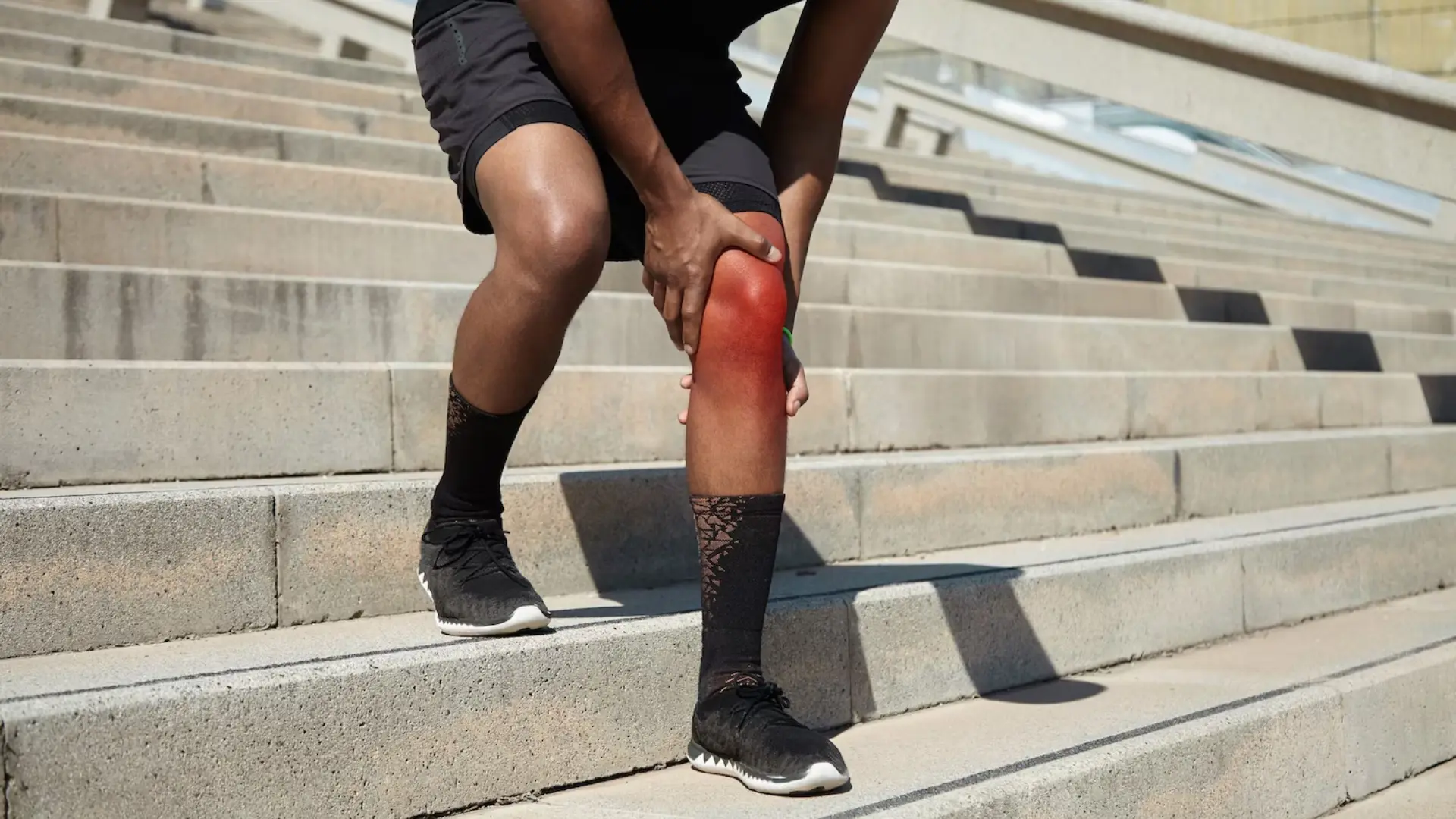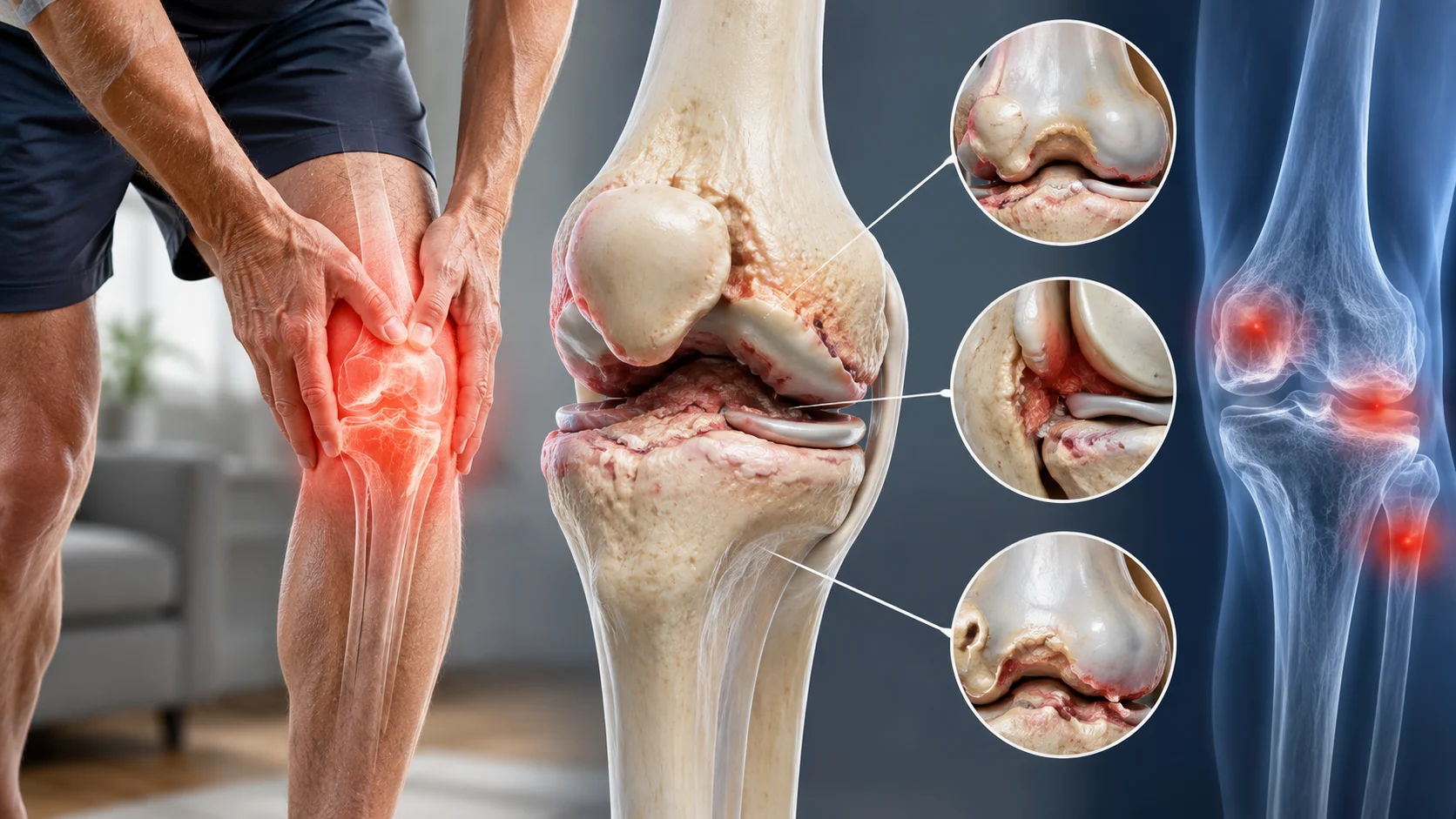
Your knee is really three joints in one. One part faces your other leg — doctors call it the medial compartment. One faces away, the lateral compartment. The third sits under your kneecap and takes a beating every time your leg bends. That’s the patellofemoral compartment.
All three spots have cartilage covering the bone. Simple job, really — cushion the bone so nothing scrapes against anything else. Walk across a parking lot and that cushion just did its work without you ever noticing. Most adults hit somewhere around 4,000 to 6,000 steps a day. Multiply that by 20 or 30 years, and the cushion starts thinning out.
What Is Tricompartmental Osteoarthritis?
Tricompartmental osteoarthritis means all three spots have lost their cushioning, not just one. The pain doesn’t stay tucked in a corner anymore. It spreads across the whole knee.
Why does the number of spots matter so much? Because one damaged area still leaves two healthy ones to help carry the load. Lose all three, and there’s nothing left to lean on.
About 14 million adults in the U.S. deal with symptomatic knee osteoarthritis right now. Spend time in an orthopedic clinic, and you’ll notice something — the advanced cases waiting on surgery usually involve all three spots, not one.
Symptoms of Tricompartmental Osteoarthritis

This doesn’t show up overnight. It builds slowly, quietly, over years.
Pain covers the whole knee instead of sticking to one side. That’s usually the giveaway that separates this from arthritis stuck in a single area.
Mornings feel stiff. So does standing up after a long drive. Early on, ten minutes of walking loosens things back up. Later, the stiffness just sticks around no matter what you do.
Swelling follows activity. Fluid builds up, skin feels tight, and bending gets uncomfortable fast.
Some people notice grinding when they move the joint. Occasionally a pop. That’s rough cartilage — sometimes bare bone — rubbing against itself. Feels worse than it sounds most days.
Bending gets harder. Straightening gets harder too. Kneeling down for something on the floor stops being something you do without thinking.
Thigh muscles weaken over time, mostly because pain keeps people from moving. Weak thighs absorb less shock. Less shock absorption means more force lands straight on the joint. That speeds the whole process up even further.
Stairs turn into the real test. One flight down sends up to three times your body weight through the knee. Ask people living with this what bothers them most, and stairs come up nearly every time.
Eventually, pain shows up while resting too. Lying flat, zero weight on the joint, still aching. Sleep goes first. Fatigue stacks on top of everything after that.
Cold, damp weather seems to make it worse for plenty of people. Nobody’s proven exactly why. Doesn’t stop the pattern from showing up again and again.
Stages of Tricompartmental Osteoarthritis
Doctors grade this zero through four using the Kellgren-Lawrence scale, based on X-ray findings.
Grade one stays quiet. Small spurs form near the joint edges. Space between bones looks close to normal. Most people feel nothing and never get checked.
Grade two brings spurs you can actually spot, plus a small drop in joint space — usually under 10 percent. Pain shows up after long walks or a few flights of stairs. Morning stiffness fades within a few minutes.
Grade three is where things get serious. Cartilage loss shows up clearly on imaging now. Joint space often drops 25 to 50 percent. Everyday stuff starts hurting — walking to grab the mail, bending down for dropped keys. Swelling after activity turns routine. A lot of people start taking pain relievers daily around here.
Grade four is severe. Joint space narrows down to almost nothing on X-ray. Cartilage across all three spots is essentially gone. Bone rubs against bone directly. Pain doesn’t need movement to show up anymore — it’s there at rest too. Dressing, bathing, walking to the kitchen, all of it takes real effort.
One thing worth knowing about tricompartmental cases specifically: since damage spreads across three areas quietly and at the same time, most people write off early symptoms as just getting older. Doctors often don’t confirm the diagnosis until grade three or four has already set in.
Causes and Risk Factors of Tricompartmental Osteoarthritis

Cartilage doesn’t wear down for no reason. A few things push the process along faster than plain aging would.
Age
Age sits at the top of the list. Cartilage cells lose their repair ability with time. Risk climbs sharply past 50. By 65, plenty of adults already show arthritis on X-ray — whether they feel anything or not.
Weight
Weight adds up fast. Faster than most people realize. Every extra pound puts close to four pounds of added pressure on the knee while walking, closer to six while squatting or climbing stairs. Carry an extra 30 pounds and each knee takes over 100 extra pounds of force, every single step, all day long.
Genetics
Genetics matter more than people usually think. Somewhere between 40 and 65 percent of arthritis risk traces back to family history. That link runs stronger in women than men.
Injuries
Old injuries have a way of coming back around. A torn ACL or meniscus — even one that healed completely — raises the odds of arthritis years later. People with a past ACL tear face up to ten times the risk of knee osteoarthritis within 10 to 20 years compared to people who never tore one.
Lifestyle
Certain jobs speed things up too. Years of kneeling, squatting, or heavy lifting wear cartilage down faster than a desk job ever would. Farmers, construction crews, flooring installers — all of them show higher rates of knee arthritis than office workers do.
Alignment
Alignment plays its own part. Bowed legs push extra weight onto the inner side. Knock knees push it onto the outer side. Give it enough years, and the third spot eventually wears down too — that’s how tricompartmental damage forms.
Gender
Women face this more than men, especially after menopause. Estrogen seems to protect joint tissue somehow. Once it drops off, cartilage seems to break down faster.
Weak muscles pour fuel on the fire too. Weak hips and thighs don’t absorb shock the way they should, so more force lands straight on cartilage instead of spreading out across the joint.
How Is Tricompartmental Osteoarthritis Diagnosed?
It starts with hands, not machines. Your doctor checks for swelling, warmth, tenderness along the joint, and grinding when you move. They’ll bend and straighten your knee themselves, watch how you walk across the room, and notice how you carry your weight.
Then come the questions. When did this start? What makes it worse? Any old injuries? Does arthritis run in your family? How active is a typical day for you? All of that shapes what happens next.
X-rays carry most of the diagnostic weight here. Standing X-rays, taken with weight on the joint, show narrowing far better than ones taken lying flat. Your doctor checks all three compartments on the same set of images to see if one area is damaged or all three.
MRI steps in when X-rays leave questions unanswered. It shows cartilage thickness, ligament health, and soft tissue detail an X-ray simply can’t catch. Surgeons often want one before planning an operation.
Blood tests rule out other suspects — things like rheumatoid arthritis, gout, and infection. Each needs a different treatment path entirely, so ruling them out matters before moving forward.
Sometimes a doctor pulls fluid straight from the joint with a needle, checking for infection or crystal buildup, ruling out other reasons behind the swelling.
A true tricompartmental diagnosis needs cartilage loss visible in all three areas on imaging. Damage limited to one spot gets a different label and a different treatment plan entirely.
Treatment for Tricompartmental Osteoarthritis
What your doctor suggests depends on your stage, your age, your weight, and what your daily life demands from your knees. Most start conservative and only move toward surgery once nothing else helps enough.
Losing weight helps more than people expect. Drop 10 pounds, and you cut close to 40 pounds of pressure off the knee with every step. Pair that with low-impact exercise, and plenty of people feel real relief within three to six months.
Physical therapy strengthens the quadriceps, hamstrings, and hips. Stronger muscles take on more of the shock, so the cartilage underneath doesn’t absorb it all directly. A program two to three times a week for six to twelve weeks shows real gains in pain and walking distance for a lot of early to moderate cases.
Swimming, cycling, water aerobics — all of it keeps the joint moving without hammering it. It also helps with weight loss without flaring up pain along the way.
Acetaminophen works for mild to moderate pain but doesn’t touch inflammation. NSAIDs like ibuprofen or naproxen handle both, though daily long-term use brings stomach and kidney risk, so doctors keep an eye on dosage. Topical NSAID creams rubbed onto the knee give some people relief without that same risk elsewhere in the body.
Corticosteroid injections calm inflammation inside the joint for weeks or a few months at a stretch, though leaning on them too often thins cartilage further over time. Hyaluronic acid injections add lubrication, easing friction, with effects often lasting three to six months.
Unloader braces shift weight away from the most damaged part of the knee while walking. A simple cane moves some load through your arm instead, taking pressure off the joint with each step.
Once nothing keeps the pain under control anymore, surgery comes up. Arthroscopy clears loose cartilage through small cuts, though it works best on early damage, not full tricompartmental wear. Osteotomy cuts and repositions bone to shift weight toward a healthier spot, usually reserved for younger patients with damage in one or two areas rather than all three.
Total knee replacement takes out the worn surfaces from all three compartments and swaps them for metal and plastic parts. This stays the standard fix once the whole joint is damaged, since there’s no healthy area left to lean on anymore.
Surgeons perform over 790,000 of these a year across the U.S. Most patients stand and walk with support within a day, get back to most daily activities within six to twelve weeks, and hit full recovery somewhere between six months and a year later.
Conclusion
Tricompartmental osteoarthritis doesn’t have to mean waiting until surgery is the only option left. The earlier it’s caught, the more choices you have: weight management, physical therapy, injections, bracing- all of it works better before the damage spreads across all three compartments.
At Conscious Regenerative Medicine, care starts with actually listening to what your body’s telling you, not just reading an X-ray and handing you a prescription. Our team looks at the whole picture: your joints, your muscles, your daily habits, your history, and builds a plan around slowing things down and keeping you moving for as long as possible.
Frequently Asked Questions
Can tricompartmental osteoarthritis be reversed without surgery?
No. Cartilage barely gets any blood flow, so it doesn’t heal on its own once it’s gone. Non-surgical treatment manages pain and slows things down. None of it brings cartilage back.
Is tricompartmental osteoarthritis the same as bone on bone?
Not exactly. Bone on bone means cartilage is fully gone and bone surfaces touch directly. Tricompartmental just tells you which spots are affected. Once someone with tricompartmental osteoarthritis loses cartilage across all three spots entirely — usually around grade four — bone on bone applies too.
What is the difference between tricompartmental and unicompartmental osteoarthritis?
Unicompartmental hits one spot, usually the medial side. Tricompartmental hits all three together. That changes which surgeries make sense. Unicompartmental sometimes qualifies for a partial knee replacement — smaller surgery, faster recovery. Tricompartmental almost always needs a full replacement since there’s no healthy area left to spare.
How quickly does tricompartmental osteoarthritis progress?
Depends entirely on the person. Some go from mild to severe grade four damage in two or three years flat. Others sit at a moderate stage for a decade without much change. Weight, muscle strength, old injuries, activity level, genetics — all of it shapes the pace.
Can I avoid knee replacement with tricompartmental osteoarthritis?
Plenty of people push it off for years through weight control, physical therapy, and smarter activity choices. But once bone touches bone across all three spots, nothing non-surgical restores real function anymore. At that point, replacement surgery becomes the option for lasting relief.