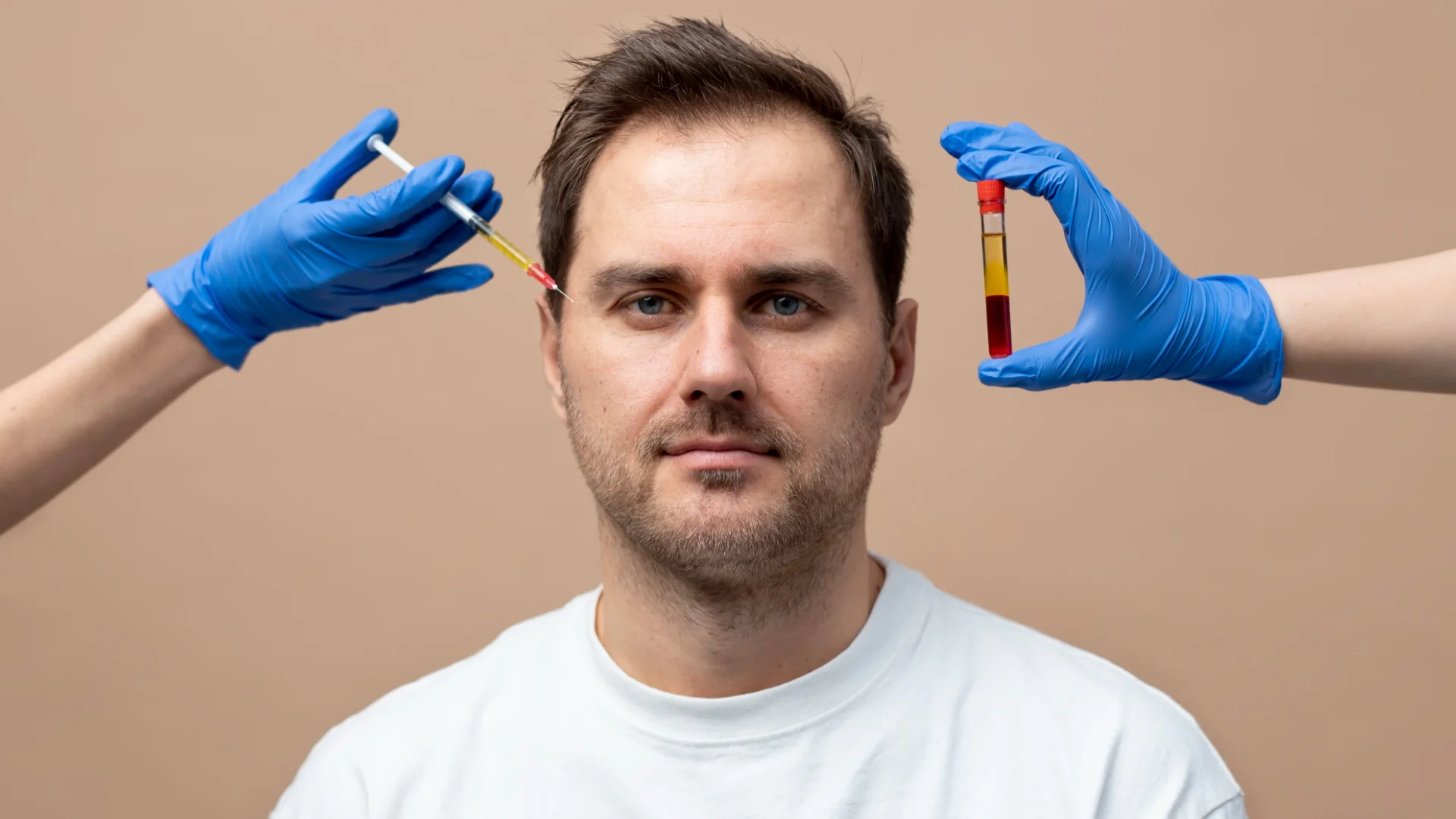
When it comes to regenerative medicine, two treatments stand out as the most popular options: PRP (Platelet-Rich Plasma) therapy and stem cell therapy. Both help your body heal naturally, but they work in different ways and are better for different health problems.
If you’re dealing with joint pain, sports injuries, or other conditions that haven’t gotten better with traditional treatments, you might be wondering which option is right for you. This guide will help you understand the differences, benefits, and costs of each treatment so you can make an informed decision with your doctor.
What Is PRP Therapy?
PRP (Platelet-Rich Plasma) therapy uses your own blood to help you heal faster. Here’s how it works:
- Blood draw: The doctor takes a small amount of your blood (like getting blood work done)
- Spinning process: Blood goes into a special machine that separates the healing parts
- Concentration: The machine creates plasma with 3-10 times more platelets than normal
- Injection: The concentrated plasma gets injected into your injured area
What Makes PRP Work?
Platelets are tiny blood cells that contain over 30 growth factors – natural proteins that tell your body to:
- Reduce inflammation
- Grow new blood vessels
- Repair damaged tissue
- Speed up healing
- Reduce pain
The FDA considers PRP a minimal manipulation procedure when using your own blood in the same surgical session. This means it’s generally considered safe and doesn’t require the same approval process as drugs.
What Is Stem Cell Therapy?
Stem cell therapy uses special cells that can turn into any type of cell your body needs. Think of stem cells as “blank” cells that can become:
- Bone cells
- Cartilage cells
- Muscle cells
- Tendon cells
- Fat cells
Types of Stem Cells Used
Autologous stem cells (from your own body):
- Bone marrow: Taken from the hip bone
- Adipose (fat): Taken from the belly or thigh
- Blood: Less common, fewer stem cells
Allogeneic stem cells (from donors):
- Umbilical cord: From donated cord blood
- Amniotic fluid: From a donated amniotic sac
- Placental tissue: From a donated placenta
FDA Regulations for Stem Cells
The FDA has strict rules about stem cell treatments:
- Approved uses: Very limited (mainly blood disorders)
- Same surgical procedure: Must be used in the same operation when taken
- Minimal manipulation: Cannot be significantly changed in the lab
- Investigational uses: Most applications are still in clinical trials
PRP vs Stem Cell Therapy: Major Differences
| Factor | PRP Therapy | Stem Cell Therapy |
| What It Uses | Your own blood platelets | Regenerative cells from bone marrow/fat |
| How It Works | Delivers growth factors to stimulate healing | Provides actual replacement cells |
| Cost Range | $500 – $1,500 per treatment | $3,000 – $10,000 per treatment |
| Procedure Time | 30-60 minutes | 2-4 hours |
| Recovery Time | 24-72 hours | 1-2 weeks |
| Results Timeline | 2-6 weeks | 3-6 months |
| Evidence Level | Strong clinical evidence | Emerging evidence |
| FDA Status | Minimal regulation | Strictly regulated |
| Insurance Coverage | 35% of private insurers | Very limited (<5%) |
| Best For | Recent injuries, mild-moderate damage | Chronic conditions, severe damage |
| Safety Risk | Extremely low (<0.1%) | Very low (<1%) |
| Duration of Results | 1-2 years | 2-5 years (potentially) |
Treatment Process: What to Expect?
PRP Treatment Process
Consultation and Assessment:
- Medical history review
- Physical examination
- Imaging if needed (ultrasound, MRI)
- Discussion of realistic expectations
Treatment Day:
- Blood draw: 30-60ml (2-4 tablespoons)
- Processing: 10-15 minutes in a centrifuge
- Preparation: Injection site cleaned and numbed
- Injection: 5-10 minutes using ultrasound guidance
- Recovery: 15-30 minutes observation
Follow-up Care:
- Ice application for 24 hours
- Avoid anti-inflammatory medications
- Gentle movement encouraged
- Follow-up appointment in 2-4 weeks
Stem Cell Treatment Process
Pre-treatment Preparation:
- Comprehensive medical evaluation
- Laboratory tests and imaging
- Consent process and education
- Pre-procedure instructions
Harvesting Process:
- Bone marrow: Local anesthesia, needle aspiration
- Fat: Local anesthesia, small liposuction
- Processing: 1-2 hours in a specialized lab
- Quality control: Cell counting and viability testing
Injection Process:
- Similar to PRP injection
- May require multiple injection sites
- Ultrasound or fluoroscopic guidance
- Longer observation period
Success Stories and Clinical Evidence

PRP Clinical Results:
- Lateral epicondylitis: 85% good to excellent results at 2 years (American Journal of Sports Medicine, 2023)
- Knee osteoarthritis: 70% pain reduction, improved function (Arthroscopy, 2022)
- Rotator cuff tears: 80% healing rate in partial tears (Journal of Shoulder and Elbow Surgery, 2023)
- Androgenetic alopecia: 67% increase in hair density (Dermatologic Surgery, 2022)
Stem Cell Clinical Results:
- Knee cartilage defects: 65% good outcomes at 2 years (Cartilage, 2023)
- Heart failure: 15% improvement in ejection fraction (Circulation Research, 2022)
- Spinal cord injury: Modest functional improvements (Cell Transplantation, 2023)
- Diabetic foot ulcers: 85% complete healing (Wound Repair and Regeneration, 2022)
Which is the Right Treatment for You- How to Choose Between Two?
PRP May Be Better If You Have:
Condition Factors:
- Acute or recent injuries (less than 6 months)
- Mild to moderate tissue damage
- Good blood supply to the injured area
- Inflammatory conditions
Personal Factors:
- Limited budget ($500-$1,500 vs $3,000-$10,000)
- Want faster results (2-6 weeks vs 3-6 months)
- Prefer a less invasive procedure
- Need to return to activities quickly
Medical Factors:
- Taking blood thinners (easier to manage)
- Have bleeding disorders (lower risk)
- Previous good response to PRP
- Want treatment with a strong evidence base
Stem Cell Therapy May Be Better If You Have:
Condition Factors:
- Chronic conditions (over 1 year)
- Severe tissue damage or loss
- Large defects needing regeneration
- Degenerative conditions
Personal Factors:
- Can afford higher costs
- Willing to wait for results
- Want potentially longer-lasting effects
- Failed previous PRP treatments
Medical Factors:
- Good overall health for the harvesting procedure
- Realistic expectations about outcomes
- Willing to participate in research protocols
- Have access to experienced stem cell specialists
Combination Therapy
Some doctors recommend combining PRP and stem cell therapy:
- Enhanced healing: Growth factors + regenerative cells
- Faster results: PRP provides immediate factors
- Better outcomes: Some studies show superior results
- Higher cost: $5,000-$15,000 for combined treatment
Questions to Ask Your Doctor
About Your Condition:
- What is the exact diagnosis and severity?
- What does imaging show about tissue damage?
- How long have I had this condition?
- What treatments have I already tried?
- What is my prognosis without treatment?
About Treatment Options:
- Which treatment do you recommend and why?
- What are the success rates for my specific condition?
- How many of these procedures have you performed?
- What are the potential risks and complications?
- What happens if the treatment doesn’t work?
About Costs and Logistics:
- What is the total cost, including follow-up?
- Does my insurance cover any portion?
- Are payment plans available?
- How many treatments will I likely need?
- What is included in the treatment package?
Conclusion
Both PRP therapy and stem cell therapy offer promising options for natural healing, but the right choice depends on your specific condition, budget, and goals. PRP provides a proven, cost-effective option with strong clinical evidence, while stem cell therapy offers potential for more comprehensive tissue regeneration.
The most important step is consulting with a qualified, board-certified physician who can evaluate your specific situation and recommend the treatment most likely to help you achieve your health goals. Remember that both treatments work best as part of a comprehensive approach that includes proper rehabilitation, lifestyle modifications, and realistic expectations.
As research continues and technology advances, both PRP and stem cell therapies will likely become even more effective and accessible, offering new hope for millions of people seeking natural alternatives to surgery and long-term medication use.